Classroom-Ready Random Object Ideas (That Actually Work)
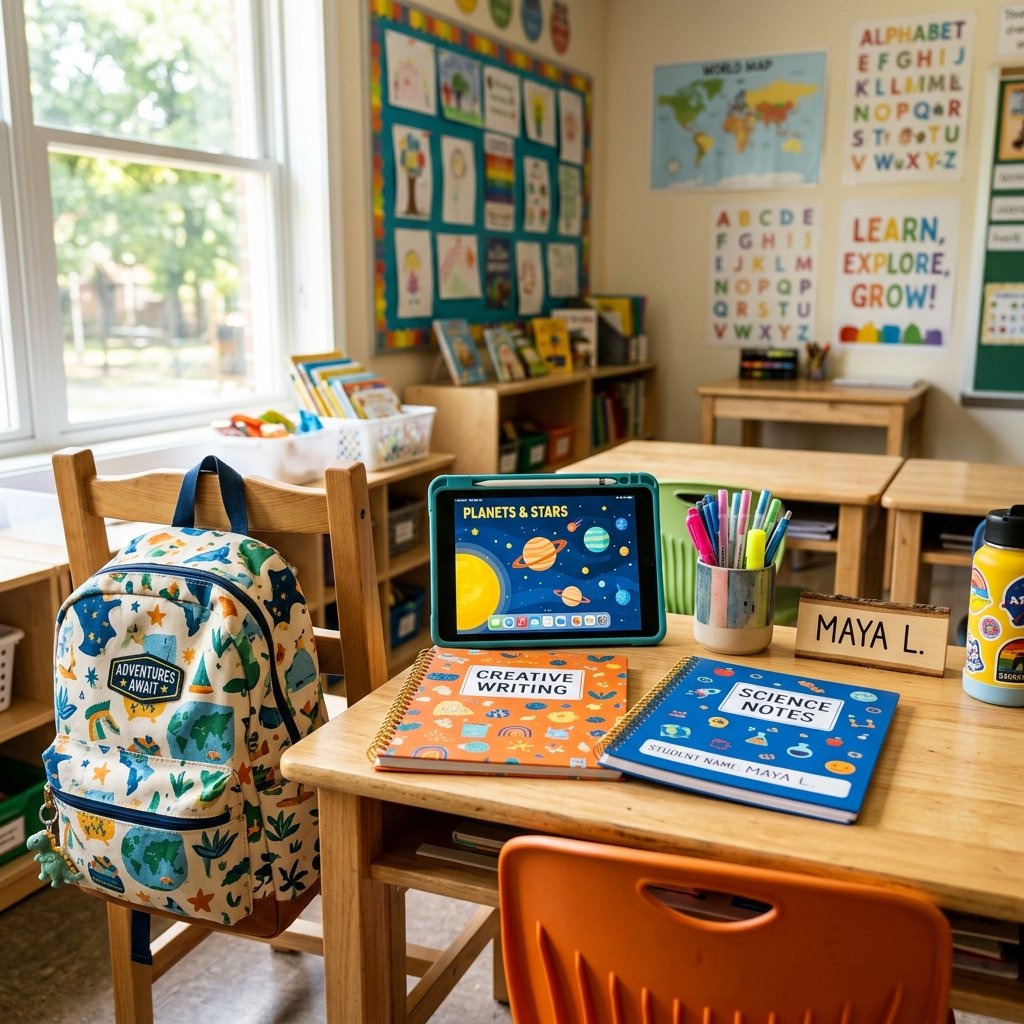
If you've ever asked a room full of students a broad, philosophical question like "What does innovation mean to you?" and were greeted with the deafening sound of crickets, you're not alone. It’s the teacher’s curse. Broad prompts are terrifying for kids because they feel like there’s a secret "right" answer they just haven't figured out yet. But if you ask a tenth-grader to "redesign this stapler for a moon-landing" or ask a third-grader to "explain how a toaster could help a pirate"? That’s easy. That’s low-stakes. And that actually gets the conversation moving.
In my years of teaching, I've found that using structured random object ideas for students is the ultimate hack for lowering that "fear of being wrong." Since there’s no textbook answer for a 'medieval cell phone,' even the quietest kids feel safe to throw out an idea. We actually tweaked our Kids Mode specifically to keep these prompts familiar enough to recognize but weird enough to spark some serious "what-if" thinking.
How to Actually Use Random Objects in Your Next Lesson
The High-Speed '2-Sentence Story': Pull up a random object and a setting on the screen. Give your students exactly two minutes to write a story that bridges the gap. For instance, if you get a "heavy iron anchor" inside a "birthday cake," you’ve suddenly got a hilariously weird mystery on your hands. It’s a brilliant way to shake off the morning cobwebs and get the pencils moving.
STEM Design Thinking: Pick an object and challenge the class to list the simple machines (levers, pulleys, screws) hidden inside its guts. It turns the boring desk they’re sitting at into a physics lab. It’s one thing to read about force and motion in a book; it’s another to explain how a randomized "can opener" actually survives a trip to Mars.
Deeper Projects for the 'Thinking' Class
Object prompts don’t have to stay in the warmup pile. I've seen educators use them for full-blown **Human-Centered Design** units. Try generating an object and tasking student teams with redesigning it for a specific niche—like seniors with limited mobility or deep-sea explorers. It forces empathy and forces them to work within real-world constraints, all starting from one randomized "thing."
In History or Social Studies, try a "Trace-the-Origin" hunt. Use our main Random Object Generator to pick an item (like a 'silk scarf') and have students dig into where that item came from. How did it move around the world? How did it change lives? It makes history feel tangible and messy, which—let’s be honest—is exactly what it is.
The 'Exit Ticket' Game Changer
The "Object of the Day" is my favorite way to close out a session. Before they head out the door, every student has to give me one unique, descriptive sentence about a random object. It’s a 30-second check for understanding that proves they can apply the day's adjectives or grammar rules in a fresh context. Plus, it ends the day on a win rather than a rush to the lockers.
Common Classroom Questions
Is this too 'babyish' for high schoolers?
Not if you ramp up the constraints. Instead of "draw this," tell a senior to "critique the industrial design of this object from a 1920s perspective." They love the challenge of applying high-level theory to low-level objects.
How can I use this for Public Speaking?
Try 'The Infomercial.' A student gets 30 seconds to sell a random object as something it definitely isn't (e.g., a paperclip as a high-tech security system). It kills public speaking nerves because everyone is laughing too hard to be judgy.
Are these lists safe for elementary students?
Yep. Our Kids Mode is curated specifically to avoid "weird" or dangerous items. It's all stuff they’d find in a kitchen, a toy box, or a garden.
Conclusion: Nurturing the 'What If?' Mentality
At the end of the day, we aren't just teaching facts; we're teaching students how to survive when they don't have the answer key. By weaving random object ideas for students into your routine, you’re giving them a safe, fun playground to practice their critical thinking.
So, clear the board, open the generator, and see where a single random object takes your class today. You might be surprised at how much innovation a "humble spatula" can inspire.
Ready to wake up your classroom?
Use our specialized Student Mode to get unlimited, safe, and classroom-ready prompts for your next lesson plan.
Start the Student Generator →